
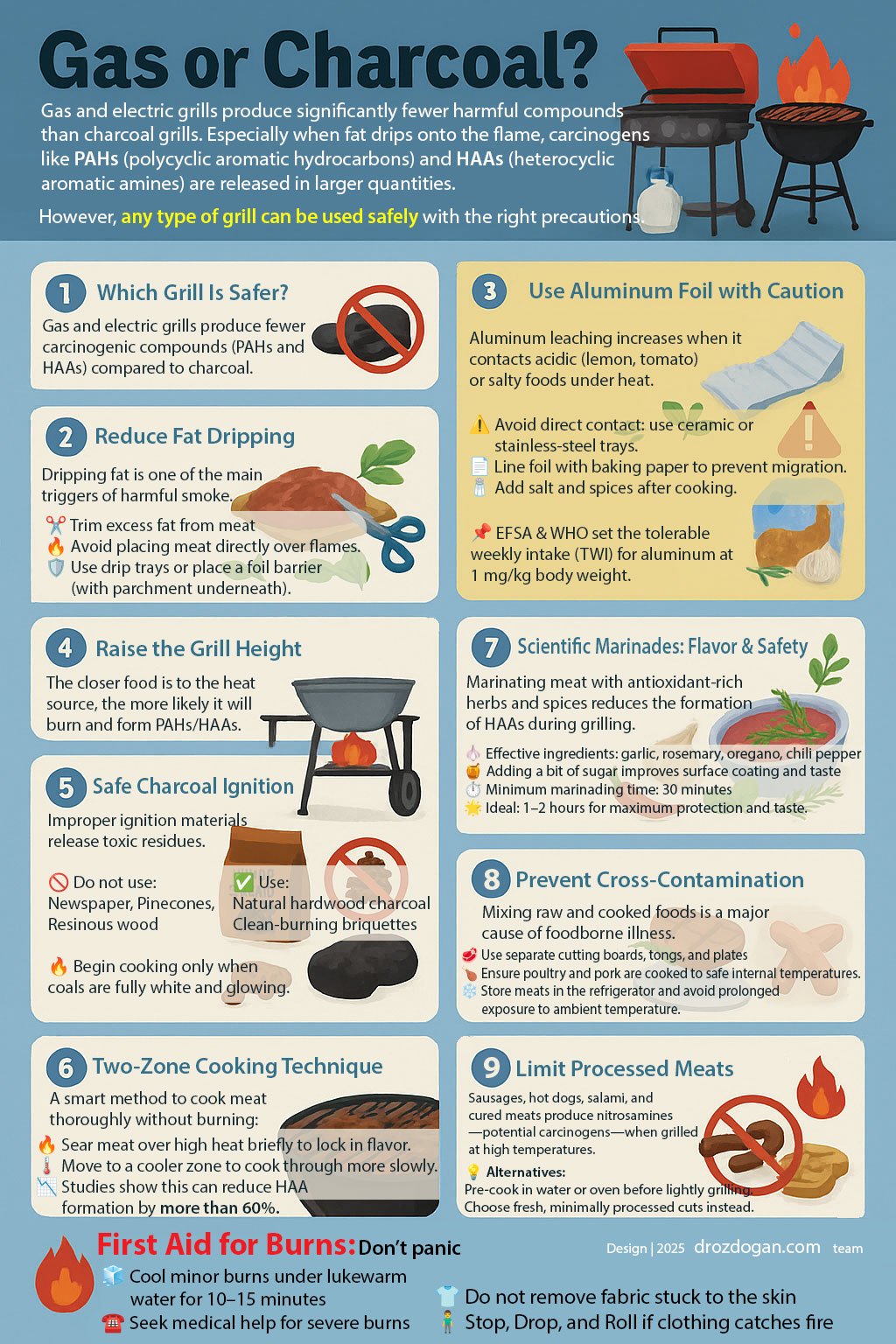
Are you wondering if charcoal grilling is safe for you and your family? You’re not alone.
Many people love the rich flavor that charcoal brings to their food but worry about the health risks involved. What if you could enjoy your favorite grilled meals without second-guessing the safety of your cooking method? You’ll discover the facts about charcoal grilling, common concerns, and simple tips to make your grilling experience both delicious and safe.
Keep reading—you might be surprised by what you learn!
Health Risks Of Charcoal Grilling
Charcoal grilling can release harmful chemicalsinto the air. These chemicals are called carcinogens. Smoke from charcoal can contain these bad chemicals. Breathing them can be dangerous. It’s important to stay away from the smoke. Try to use a fan or grill outside. This helps keep the air cleaner.
Cooking with high heat can change food. It makes food taste yummy. But, it can also make harmful substances. These are called heterocyclic amines (HCAs). HCAs form when meat is cooked at high temperatures. Eating too much HCAs is not healthy. It’s smart to cook food at lower temperatures.
Some charcoal has added chemicals. These are called additives. Additives can make charcoal light faster. But they can also be unsafe. They might release bad fumes. Using natural charcoal is a safer choice. It has fewer chemicals. Keeping food safe is important.
Choosing Safer Charcoal Options
Natural lump charcoalis made by burning wood slowly. It contains no chemicals. This means food tastes better and is healthier. It burns hotter and faster. Less ash is left after grilling. This charcoal is environmentally friendlybecause it uses wood scraps or fallen branches.
Chemical briquettesoften have additives like binders and fillers. These can release harmful fumeswhile cooking. They also produce more ash, which can block air flow. Avoiding these briquettes helps keep your grill clean and food safer.
Eco-friendly alternativesinclude coconut shell charcoal and hardwood charcoal. These options burn clean and last longer. They reduce waste by using natural materials. Choosing these helps protect the planet and your health.
Techniques For Healthier Grilling
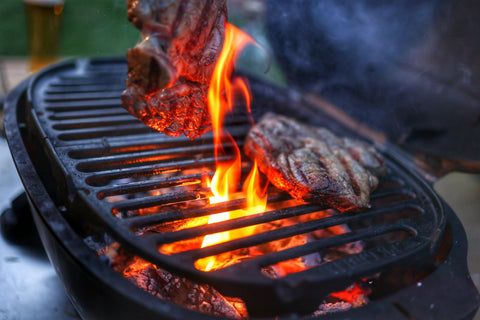
Control the heat by spreading charcoal evenly. Use a chimney starter for quick lighting. Avoid large flames to prevent burning food.
Marinate meat before grilling. Marinades with lemon, vinegar, or herbs lower harmful chemicals. They also add flavor and keep food moist.
- Place food beside, not above, flames.
- Turn food often to avoid charring.
- Use long-handled tools to keep distance.
Credit: globalticltd.co.uk
Safe Food Handling Practices
Preventing cross-contaminationis key to safe grilling. Use separate plates for raw and cooked meat. Wash hands and surfaces often to stop germs from spreading. Keep raw meat away from vegetables and cooked food.
Cooking meat thoroughlykills harmful bacteria. Use a meat thermometer to check the temperature. Beef, pork, and lamb should reach 145°F (63°C). Ground meat needs 160°F (71°C), and poultry must hit 165°F (74°C). Avoid guessing to stay safe.
Resting and serving tipsimprove food safety and taste. Let meat rest for 3-5 minutes after cooking. This helps juices settle and temperature stay steady. Serve food on clean plates. Do not reuse plates that held raw meat.
Cleaning And Maintenance For Safety
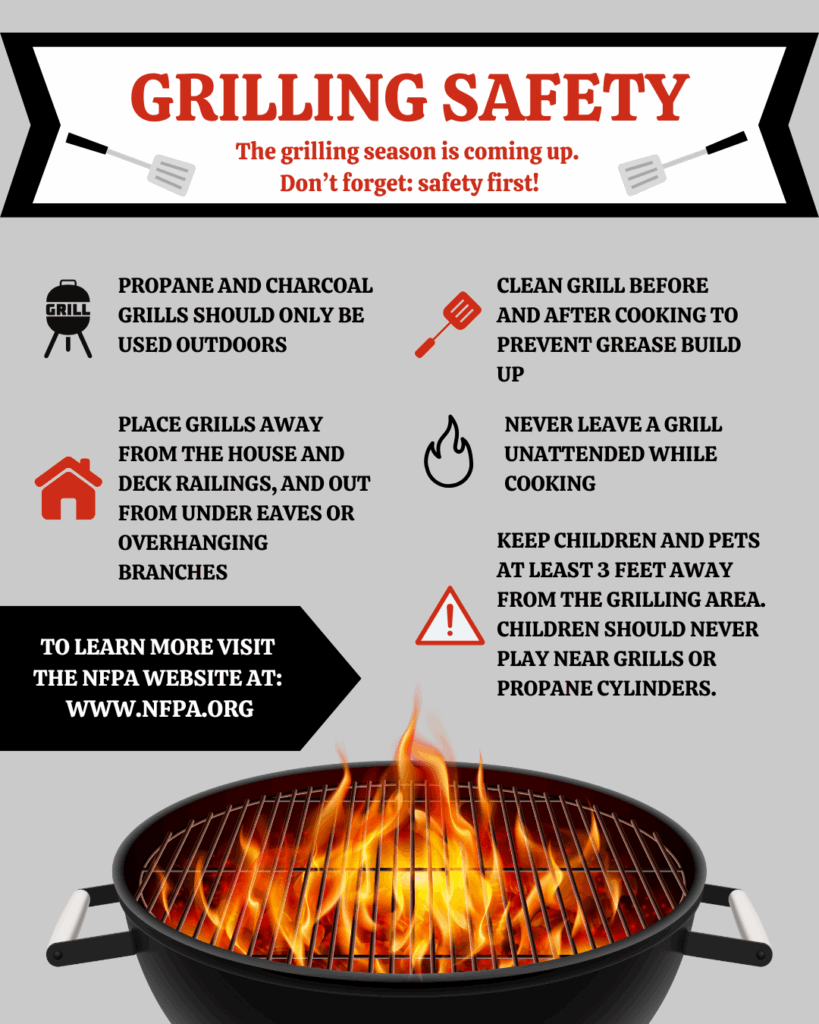
Cleaning the grill after each use prevents grease buildup and reduces fire risk. Regular maintenance keeps charcoal grills safe and working well. Proper care ensures a safer cooking environment for everyone.
Removing Residue And Ash
Clean the grill after every use.Remove leftover food and grease. Let the ashes cool before throwing them away. Ash buildup can block airflow and cause uneven heat. Use a grill brush to clean grates well. This helps keep your food safe and tasty.
Proper Grill Storage
Store the grill in a dry place. Cover it with a grill cover to keep dust and rain off. Avoid places with strong wind or moisture. This protects the grill and stops rust from forming. Good storage makes your grill last longer.
Regular Inspection For Damage
Check the grill for cracks or broken parts often. Look for rust spots and loose screws. Fix problems before using the grill again. A safe grill means safer cooking for everyone.
Credit: georgetownfd.com

Credit: www.siuhaau.com
Frequently Asked Questions
Is Charcoal Grilling Harmful To Health?
Charcoal grilling can produce harmful chemicals like PAHs and HCAs. However, proper techniques reduce risks. Use lean meats, avoid charring, and grill at moderate temperatures to make it safer for health.
How To Reduce Toxins From Charcoal Grilling?
To reduce toxins, marinate meats, flip frequently, and avoid direct flames. Use natural lump charcoal instead of briquettes. Keep grill clean and cook at lower temperatures to minimize harmful chemical formation.
Does Charcoal Grilling Cause Cancer?
Charcoal grilling produces carcinogens, but moderate consumption with precautions lowers risk. Avoid burnt food, use marinades, and eat a balanced diet. Occasional grilling is generally safe without significantly increasing cancer risk.
What Are Safer Alternatives To Charcoal Grilling?
Gas and electric grills produce fewer harmful compounds. They offer better temperature control and less smoke. These options are healthier for regular grilling while still providing great flavor and convenience.
Conclusion
Charcoal grilling can be safe with simple steps. Use good quality charcoal and avoid lighter fluid. Keep the grill clean to reduce harmful smoke. Cook food thoroughly to kill bacteria. Stay outside or in a well-ventilated area. Watch the grill to prevent flare-ups and burns.
Enjoy grilling but take small safety steps. This way, you can have tasty meals and stay healthy. Safe grilling makes your cookout more fun and worry-free.
