
If you want to carve meat like a pro, the way you hold your carving knife makes all the difference. Holding it incorrectly can make cutting harder, slower, and even dangerous.
But when you learn the right grip, every slice becomes smooth, precise, and effortless. You’ll discover simple steps to hold your carving knife properly, so you can impress your guests and enjoy cooking more. Keep reading—your carving skills are about to get a serious upgrade.

Credit: www.coolinastore.com
Choosing The Right Carving Knife
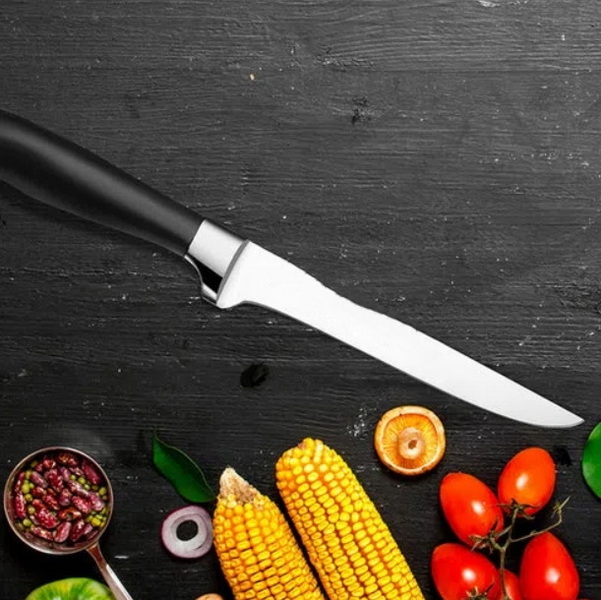
Choosing the right carving knife is key for safe and easy cutting. Types of carving knivesvary by blade shape and size. Some are thin and long for smooth slices, while others are shorter for control. Pick a style that fits your cutting needs.
Blade material affects how sharp and strong the knife stays. High-carbon steelblades keep sharp edges longer but need more care. Stainless steel resists rust and is easier to clean. Sharpness is crucial for clean cuts and safety.
The handle designmust feel comfortable in your hand. Look for handles with good grip and balance. Materials like wood or rubber offer better control. A comfy handle reduces hand fatigue during carving.
Credit: www.insight-kitchenknife.com
Preparing Your Workspace
Clear your workspace by removing clutter and ensuring good lighting. Place a stable cutting board to keep the knife steady. Prepare your tools within easy reach for safe, smooth carving.
Stable Cutting Surface
A firm and steady cutting surface is key for safe knife use. Use a non-slip cutting board to stop it from moving. Avoid glass or marble boards since knives can slip on them. A wooden or plastic board works best. Check the surface before you start cutting.
Proper Lighting
Bright light helps you see what you cut clearly. Use overhead lights or a lamp to shine directly on your workspace. Avoid shadows that hide the knife or food. Good lighting reduces accidents and makes cutting easier.
Safety Measures
- Keep your fingers away from the blade.
- Wear cut-resistant gloves if needed.
- Keep knives sharp to avoid slipping.
- Clear the area around you to avoid bumps.
- Use a damp cloth under the cutting board for extra grip.
Basic Knife Grip Techniques
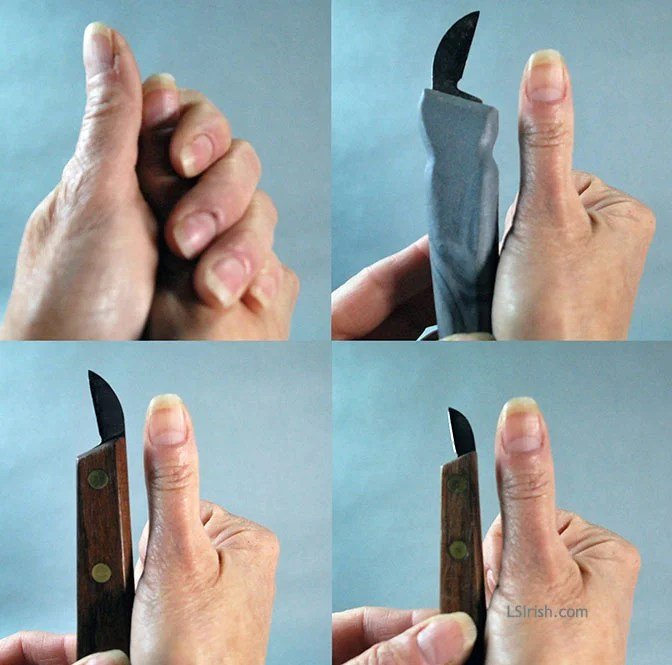
Pinch Gripmeans holding the knife blade and handle together. Your thumb and index finger pinch the blade. This grip gives better control and precision while cutting. It feels natural and steady.
Handle Gripis when you hold only the handle with all your fingers wrapped around it. This grip is good for heavy cutting or chopping. It offers more power but less control than the pinch grip.
| Common Mistakes | Why to Avoid |
|---|---|
| Holding knife too far from blade | Less control, more chance to slip |
| Gripping too tight | Hand gets tired quickly |
| Using only fingertips | Weak grip, unsafe cutting |
| Pointing knife up | Dangerous and hard to cut properly |

Credit: lsirish.com
Hand Positioning And Control
The non-dominant hand holds the food steady. Fingers curl inward to avoid cuts. The thumb rests behind the fingers for safety.
Keeping the knife stable is key. Hold the handle firmly but not too tight. This control helps make smooth cuts.
The non-dominant hand guides the knife’s path. It moves the food slowly and carefully. This ensures safe and even slicing.
Cutting Techniques For Precision
Use smooth slicing motionsto keep cuts clean and even. Avoid chopping or pressing hard. Let the knife do the work by moving it forward and back gently.
Keep consistent pressureon the knife. Too much force can damage the food or cause accidents. Too little can slow you down and make uneven cuts.
| Food Type | Recommended Technique |
|---|---|
| Soft fruits (e.g., tomatoes) | Use light pressure and gentle slicing |
| Hard vegetables (e.g., carrots) | Apply steady pressure with slow slicing |
| Meats | Slice with smooth back-and-forth motions |
| Herbs | Use quick, light chopping motions |
Knife Maintenance For Safety And Efficiency
Keeping your carving knife sharp is important for safety and ease. Dull knives need more force and can slip. Use a sharpening stone or tool regularly to keep the edge fine.
Cleaning your knife after each use stops rust and damage. Wash with warm water and mild soap. Dry it well before storing to avoid moisture.
Store the knife in a dry place, away from other tools. Use a knife block, sheath, or magnetic strip to protect the blade and your hands.
Check your knife often for cracks, chips, or loose handles. Any damage can cause accidents. Replace or repair the knife if you find problems.
Common Injuries And How To Prevent Them
Holding a carving knife improperlycan cause cuts, slips, and hand injuries. Tight grips that squeeze too hard or using too much force increase risks. Always keep fingers away from the blade’s path and avoid distractions while cutting. Sharp knives are safer than dull ones because they cut easier and need less pressure.
Common risky practices include:
- Cutting toward your fingers or palm
- Using a dull blade that slips
- Holding the knife with wet or greasy hands
- Using the wrong knife for the job
| First Aid Tips | When to Seek Medical Help |
|---|---|
|
|
Frequently Asked Questions
How Do I Grip A Carving Knife Correctly?
Hold the carving knife with a firm grip using your dominant hand. Wrap your fingers around the handle and place your thumb on the spine for control. Maintain a relaxed wrist to prevent fatigue and improve precision while slicing.
What Is The Best Angle To Hold A Carving Knife?
Hold the knife at a 15 to 20-degree angle to the cutting surface. This angle allows smooth, clean cuts without tearing the meat. Adjust slightly based on the meat’s texture for optimal slicing results.
Should I Use My Whole Hand Or Fingertips To Hold The Knife?
Use your whole hand to grip the knife handle for stability. Avoid holding it with just fingertips as it reduces control and increases the risk of slipping. A full grip ensures safer and more precise cuts.
How Can I Prevent My Hand From Slipping On The Knife?
Keep your hands dry and clean before handling the knife. Use a knife with a textured or non-slip handle for better grip. Applying slight pressure with your thumb on the spine enhances control and reduces slipping.
Conclusion
Holding a carving knife safely is vital. It ensures smooth, easy cuts. Remember to grip the handle firmly. Keep your fingers away from the blade. Practice makes perfect. Start slow and steady. Over time, your confidence grows. Always prioritize safety over speed.
A proper grip helps prevent accidents. It also improves your cutting skills. Safe handling protects you and your food. With these tips, you carve like a pro. Enjoy your cooking adventures.
